
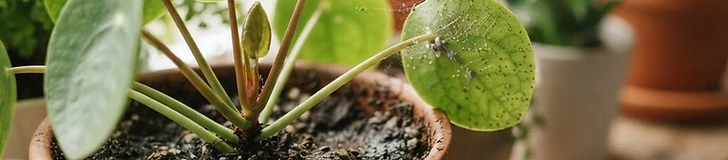
Keeping your indoor jungle healthy means staying ahead of common houseplant pests. While finding a few bugs can be disheartening, most infestations are manageable if you act quickly and monitor your plants regularly. Here is how to identify and address the three most frequent offenders.
Fungus Gnats
These are the tiny, black flying insects that hover around your soil. They are usually a sign of overwatering. The larvae live in the top 1 to 2 inches of moist soil and feed on organic matter.
- Allow the top inch of soil to dry out completely between waterings to break their life cycle.
- Use yellow sticky traps near the base of the plant to catch flying adults.
- For heavy infestations, use a drench of BTI (Bacillus thuringiensis israelensis), which is safe for plants but disrupts the larvae.
Spider Mites
These microscopic pests are difficult to see until damage appears. They thrive in dry, warm conditions, especially during winter when indoor humidity drops below 40%. Look for fine, silky webbing between stems and leaves, accompanied by tiny yellow stippling on foliage.
Pro Tip: Because spider mites love dry air, you can prevent them by regularly misting your plants or placing them on a pebble tray filled with water to increase localized humidity.
- Gently wipe leaves with a damp cloth or shower the plant with lukewarm water.
- Apply neem oil or insecticidal soap, ensuring you coat the undersides of the leaves where they congregate.
Mealybugs
Often looking like small tufts of white, cottony fuzz, mealybugs prefer the nooks and crannies where stems meet leaves. They are sap-suckers that weaken the plant and can cause stunted growth or yellowing leaves.
- Dip a cotton swab in 70% isopropyl alcohol and dab it directly onto the white clusters to kill them on contact.
- Isolate the infested plant immediately to protect your other greenery.
- Keep the plant away from bright, direct sunlight while the alcohol dries to prevent leaf scorch.
Consistent observation is the best defense, so take a close look at your plants every time you water to catch these pests before they spread.