
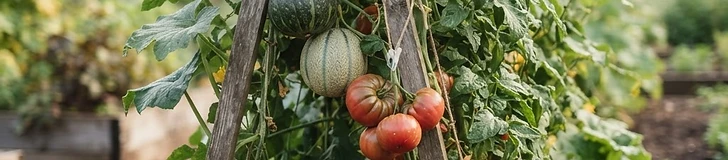
Growing heavy-fruited vines vertically saves precious ground space and keeps produce clean, but these hefty harvests require more than standard stakes. In this guide, you will learn the essential engineering techniques to support squash, melons, and beefsteak tomatoes as they climb.
The Weight Challenge
When growing Cucurbita pepo or large heirloom tomatoes, the main challenge is preventing vine collapse and fruit rot. Gravity works against you once a melon reaches 2-5 pounds. To succeed, move beyond basic garden twine and install heavy-duty cattle panels or reinforced wooden trellises that can withstand the tension of a full harvest. For USDA zones 4 through 9, ensure your structures are anchored at least 12 inches deep to handle the load when summer winds blow against the broad leaves of these plants.
Custom Fruit Hammocks
For heavy crops like cantaloupes or butternut squash, the stem alone cannot support the fruit as it grows. You must provide a physical cradle.
- Cut squares of old pantyhose, cheesecloth, or lightweight fabric.
- Once the fruit reaches the size of a tennis ball, gently place it in the fabric sling.
- Tie the ends securely to the trellis structure, effectively offloading the weight from the vine to the support frame.
Pro tip: Use stretchy materials like nylon hosiery for your hammocks; they expand as the fruit grows, preventing constriction marks that can lead to rot.
Tomato Trellising Techniques
Large beefsteak varieties thrive when you limit the main stems to one or two leaders. As the fruit sets, use a 'basket-weave' technique with heavy-duty twine or individual fruit clips. If you are growing in containers, ensure your vertical support is bolted to the side of the pot to prevent the entire container from tipping over once the vines reach full height in 80°F temperatures.
Monitoring and Maintenance
Vertical crops require vigilant monitoring. Check your trellis ties weekly to ensure the vine isn't strangling itself. As the plants mature, add extra support ties for heavy fruit clusters to ensure the weight is distributed evenly across the entire frame. If you notice sagging sections, add supplemental support immediately to prevent a total structural collapse.
With a bit of structural planning and simple fruit hammocks, your vertical garden will safely produce abundant harvests all season long.