
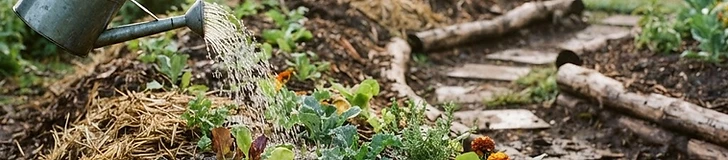
In your first year, a hugelkultur mound is essentially a decomposing sponge that requires unique management. By understanding how the internal wood layers settle and retain moisture, you can successfully establish a thriving garden in any USDA zone.
Initial Watering Requirements
Newly constructed hugel-beds have significant air pockets as the logs begin to settle. Unlike standard raised beds, these mounds can dry out quickly during the first six months. Use a soaker hose or drip irrigation to ensure the core is consistently moist, especially during temperatures exceeding 75°F. You will know the bed is sufficiently hydrated when the soil surface feels damp to the touch, roughly 2 inches down, rather than bone-dry or hydrophobic.
Planting Strategy
Because the decomposition process generates heat, it is perfect for heavy feeders that appreciate warm soil. In year one, focus on nitrogen-hungry plants that thrive as the wood breaks down. Avoid planting deep-rooting perennials immediately, as the mound will shrink significantly by the end of the season.
- Summer squash (Cucurbita pepo)
- Tomatoes (Solanum lycopersicum)
- Leafy greens like kale (Brassica oleracea)
- Pole beans (Phaseolus vulgaris)
Pro tip: Place your starts into small pockets of finished compost or potting soil rather than planting directly into raw wood chips to protect delicate root systems from the initial high-heat decomposition phase.
Managing Soil Nitrogen
As microorganisms break down carbon-rich logs, they temporarily pull nitrogen from the surrounding soil. To prevent nitrogen deficiency in your crops, amend the mound with a generous layer of high-quality compost before planting. If you notice yellowing leaves on your plants, side-dress with an organic, high-nitrogen fertilizer or fish emulsion to bridge the gap while the bed matures.
Mulching for Moisture
Even with the internal water retention of the wood core, the exterior is prone to evaporation. Apply a 3-inch layer of straw or wood mulch over the exposed soil to maintain even moisture levels. This prevents the surface from crusting over and keeps the soil biology active, which is crucial for the long-term success of your mound.
Consistent moisture management during this first year sets the stage for a self-sustaining garden that will require significantly less water in years two and beyond.