
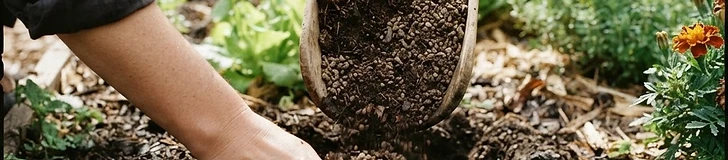
Soil feeds your plants; fertilizer is the occasional top-up. Get the basics down once and you'll never overthink it.
The NPK label
Every fertilizer label shows three numbers, N–P–K: nitrogen, phosphorus, potassium.
- N (Nitrogen) grows green leaves. Leafy crops and herbs want more.
- P (Phosphorus) builds roots, flowers, fruit. Tomatoes, peppers, and root crops want more.
- K (Potassium) supports overall health and disease and drought resistance.
A balanced 5-5-5 or 10-10-10 works for most vegetables; tomatoes do best with a middle number at least as high as the first.
Organic vs. synthetic
- Organic (compost, fish emulsion, kelp, bone meal, worm castings) feeds the soil food web, releases slowly, and is almost impossible to over-apply. Best for long-term beds.
- Synthetic (blue-liquid, water-soluble) is fast and precise, great for containers and a quick green-up. Easy to overdo — burned leaves and salty buildup in the soil follow.
Mix in an inch of compost each season and you may not need much else for a productive in-ground bed.
When to feed
- At planting: mix a slow-release organic into the bed or hole.
- At first fruit set: a side-dress of compost or a liquid feed for heavy feeders (tomatoes, squash, brassicas).
- Containers: every 1–2 weeks with a liquid, because nutrients wash out the drainage holes.
The signs you're over or under
Yellow lower leaves and slow growth = nitrogen hungry. Purple undersides and poor fruit set = phosphorus. Cracked tomatoes and poor flowering can be calcium or potassium — not always NPK, so diagnose before dumping.
Feed the soil, not just the plant. A bed that gets compost every season needs less and less bottled help.