
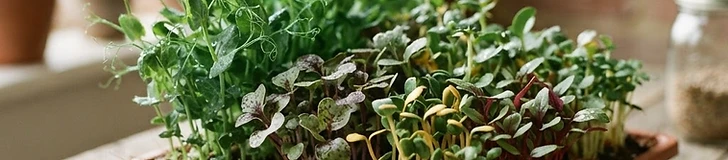
Starting your own microgreen garden is the fastest way to see a return on your investment, whether for your kitchen table or a small local market. By focusing on rapid-growing varieties, you can turn a tray of seeds into a nutrient-dense harvest in as little as 7 to 14 days.
Choosing the Right Seeds
To ensure success, focus on high-germination seeds that grow uniformly. Raphanus sativus (Radish) is arguably the best entry point for beginners. These seeds are large, easy to handle, and produce spicy, crunchy sprouts in just 7 days. They are highly profitable due to their high volume and short turnaround time, making them a staple for any home grower in any USDA zone, as they thrive in standard indoor temperatures between 65°F and 75°F.
Reliable Varieties for Beginners
Consistency is key when you are first learning the ropes. Start with these three reliable options:
- Pisum sativum (Pea Shoots): These are large, forgiving, and grow remarkably fast. They offer a sweet, crunchy flavor that commands a premium price.
- Helianthus annuus (Sunflower): While they require a longer soak, their nutty flavor and thick, satisfying stems make them a bestseller.
- Brassica rapa (Mizuna or Tatsoi): These germinate exceptionally well and create a beautiful, delicate canopy of greens that are perfect for salads.
Pro Tip: Always use organic, untreated seeds labeled specifically for sprouting or microgreens to avoid chemical coatings that can inhibit growth or pose health risks.
Mastering the Environment
Your growing medium significantly impacts your bottom line. Using a sterile coco coir or a specialized potting mix about 1 inch deep provides the perfect balance of moisture retention and drainage. Avoid letting the soil dry out, but never leave it waterlogged, as this invites mold. Good airflow is just as important as light; a small oscillating fan near your trays will prevent dampening-off disease, which is the most common cause of failure for beginners.
Maximizing Your Harvest
Efficiency comes down to the harvest technique. Use a sharp, sterile pair of kitchen shears to cut the greens just above the soil line. For varieties like peas and sunflowers, ensure you wash your hands thoroughly before handling to maintain a clean crop. Harvesting early in the morning, when the plants are most turgid, ensures your greens stay crisp and fresh for days in the refrigerator.
Start small with one or two trays, master the moisture levels, and you will be scaling up your harvest in no time.