
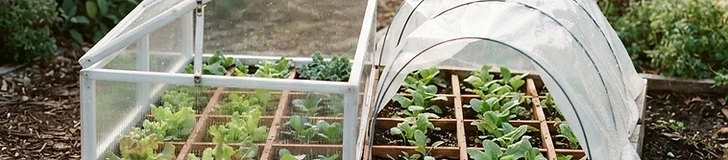
Extending your harvest beyond the typical frost dates is a game-changer for high-density square-foot gardening. By creating a protected microclimate over your beds, you can start earlier in spring and keep growing hardy crops well into late autumn, regardless of your specific USDA zone.
The Low Tunnel Method
A low tunnel is the simplest way to add warmth to your 4x4 or 4x8 foot grids. You simply insert flexible PVC or wire hoops into your bed corners, then drape them with horticultural frost cloth or clear greenhouse plastic.
- Use heavy-duty wire for smaller beds to easily bend and anchor.
- Secure the edges with landscape staples or bricks to prevent wind from stripping the cover.
- For late-season greens like Spinacia oleracea, ensure the plastic is vented during sunny days if temperatures exceed 60°F.
Utilizing Cold Frames
Cold frames are rigid, box-like structures with a transparent lid that act as miniature greenhouses. Unlike tunnels, they provide better insulation against freezing winds and heavy snow.
- Build a frame using untreated cedar boards that matches the dimensions of your existing grid.
- Use old windows or twin-wall polycarbonate sheets for the lid.
- Position the frame so the sloped top faces south to maximize solar gain during short winter days.
Tip: When temperatures drop below 32°F, place a dark-colored water jug inside your cold frame to act as a thermal mass; it will absorb heat during the day and release it slowly at night to protect delicate seedlings.
Managing Your Microclimate
Monitoring the health of your high-density plants inside these structures is crucial. In a square-foot garden, moisture evaporates differently under covers. Always check the soil moisture level weekly, even in winter, as the limited space can dry out surprisingly fast. If you notice condensation dripping heavily, prop open the edge of your cover for a few hours to allow airflow and prevent fungal issues among your crops. By regulating these small environments, you effectively create a buffer against unpredictable weather, ensuring your intensive planting efforts don't go to waste when the thermometer dips.