
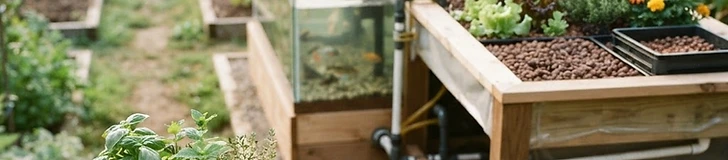
Scaling your aquaponic setup from a desktop unit to a full backyard operation is an exciting way to boost your food independence. This transition requires moving from small, glass-based systems to larger, more stable biological environments capable of supporting year-round harvests. ## Assessing Your Site Needs. Unlike a 5-gallon tabletop tank, a backyard system requires a stable, level footprint. You will need a space that receives at least 6 to 8 hours of sunlight daily, though you should protect the water from extreme heat in regions where temperatures exceed 90°F. Ensure your chosen area is within 50 feet of a water source and a standard GFCI-protected power outlet to keep your pumps running safely. ## Selecting Your Hardware. When moving outdoors, move toward IBC totes or heavy-duty stock tanks, which provide higher water volume. Higher volume creates thermal mass, which buffers against rapid temperature swings that can shock your fish. Use durable media like expanded clay pellets in your grow beds; these provide excellent surface area for beneficial bacteria to convert fish waste into plant-ready nitrates. ## Choosing Your Biological Team. For most US home gardeners, hardy fish species are best for outdoor success. Oreochromis niloticus (Tilapia) are the gold standard for warm-weather growth, while those in cooler climates (USDA zones 6-7) might prefer Ictalurus punctatus (Channel Catfish). Match your plants to the season; leafy greens like Lactuca sativa (lettuce) thrive in spring, while fruiting crops like Solanum lycopersicum (tomatoes) need the high heat of summer to produce well. > Pro Tip: Always over-filter your backyard system; aim for a pump that cycles your entire water volume at least once every hour to maintain optimal oxygen levels for both fish and plant roots. ## Managing the Cycle. Your biofilter is the heart of your system. Once you scale up, the nitrogen cycle needs more time to establish. Before adding your full stock of fish, cycle the system using an ammonia source for 4 to 6 weeks. This ensures the bacterial colonies are robust enough to handle the increased load of a larger outdoor setup, preventing water quality crashes as the temperatures rise. With consistent monitoring of your water pH and ammonia levels, your backyard system will eventually become a self-sustaining ecosystem that provides food throughout the growing season.
 Aquaponics
Expanding Your Aquaponic Horizons: From Desktop Units to Backyard Systems
2 min read 378 words
Learn how to successfully transition your small-scale aquaponic setup into a productive, backyard-scale garden that provides fresh fish and vegetables.
Watch & learn
Curated variety-trial and pest-ID videos related to this article.
How to Build a Backyard Aquaponics System
Open#aquaponics#backyard gardening#sustainability#urban farming#DIY