
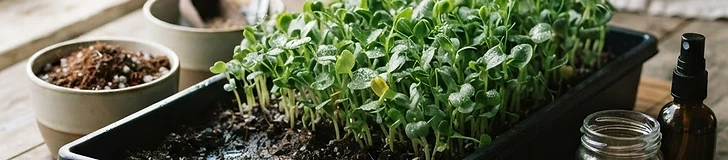
Starting your own indoor microgreen farm is a rewarding project that fits on any kitchen counter. In this guide, we break down the three foundational elements—trays, media, and seeds—to help you grow healthy greens year-round in any USDA hardiness zone.
Selecting the Right Trays
For consistent results, drainage is your most important consideration. While many gardeners reuse plastic containers, purpose-built 10x20-inch trays are standard for a reason. Look for a two-piece system: a solid bottom tray to hold water and a mesh or perforated tray that sits inside. This prevents roots from sitting in stagnant water, which is the leading cause of mold growth in indoor gardening.
Choosing Your Growing Media
Your growing medium serves as the anchor for developing root systems. Beginners often find the most success with these options:
- Coco coir: A sustainable, peat-free fiber that retains moisture perfectly.
- Hemp mats: Clean, soil-free, and compostable options that make cleanup effortless.
- Potting soil: Provides natural nutrients, though it can be messier to harvest.
Pro tip: If using soil, press your seeds firmly into the surface with a flat tool to ensure optimal seed-to-soil contact, which dramatically improves germination rates across the entire tray.
Picking High-Yield Seeds
When selecting seeds, prioritize those labeled specifically for microgreen use. These are untreated and free from chemical fungicides. Start with varieties that are vigorous and forgiving for beginners:
- Brassica rapa (Mizuna or Tatsoi): Fast-growing and mild in flavor.
- Raphanus sativus (Radish): These germinate within 48 hours and offer a satisfying spicy crunch.
- Helianthus annuus (Sunflower): Requires a slightly longer growth cycle but produces large, hearty shoots rich in protein.
Managing Your Environment
Microgreens thrive in temperatures between 65°F and 75°F. Since these plants do not require deep root space, you can easily grow them in shallow containers on a sunny windowsill or under basic LED shop lights. Keep the air circulating to prevent humidity buildup, and you will see your first harvest ready to cut in just 7 to 14 days. Happy growing!