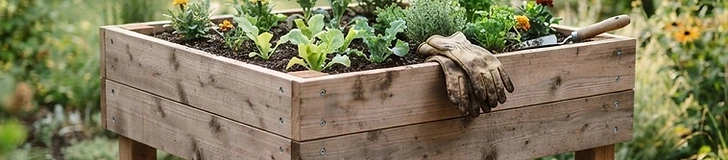
A wooden garden bed built on thick legs sitting on a patio, filled with green leafy vegetables and herbs at a comfortable standing height.Garden DIY & Builds

Ergonomic Gardening: Building a Raised Bed on Legs

2 min read 388 words

Take the strain out of gardening by building a table-height raised bed that saves your back and knees.

Gardening at ground level can be tough on the back and knees, but a raised bed on legs brings the work up to a comfortable standing height. By building a cedar or untreated pine planter with sturdy supports, you can create an accessible workspace in any USDA hardiness zone that keeps your soil warm and your plants within easy reach.

Choosing Your Materials Selecting the right lumber is the foundation of a durable build. Use rot-resistant wood like cedar or redwood, which naturally withstands exposure to moisture and soil. Avoid pressure-treated wood if you plan to grow organic vegetables, as chemicals can leach into the soil. Aim for a total height of 30 to 36 inches, which allows most gardeners to work without bending over.

Designing the Frame To build your bed, follow these steps to ensure stability:

  1. Construct a sturdy rectangular frame using 2x8 or 2x10 lumber.
  2. Attach four 4x4 posts to the corners to serve as legs.
  3. Install a bottom frame support made of exterior-grade plywood or slats to hold the weight of the damp soil.
  4. Drill several 1/2-inch holes in the base to ensure proper drainage, as standing water will cause root rot.

Tip: Line the interior sides of your raised bed with heavy-duty landscape fabric before adding soil; this protects the wood from direct contact with moisture and significantly extends the lifespan of your structure.

Filling and Planting Once your structure is secure, fill it with a high-quality mix of 60% topsoil, 30% compost, and 10% perlite or vermiculite for drainage. Because table-height beds lose heat faster than ground beds, they are excellent for early-season planting. When temperatures consistently stay above 50°F, you can start your favorite Lactuca sativa or Spinacia oleracea directly in the bed.

Ongoing Maintenance Because these beds have less soil volume than ground beds, they dry out more quickly. Check the moisture level by inserting your finger two inches into the soil; if it feels dry, it is time to water. Add a layer of straw mulch to regulate soil temperatures during the hottest summer months and consider using a light fertilizer once every three weeks during the peak growing season to replenish nutrients. With proper care, your elevated garden will provide a productive and pain-free sanctuary for years to come.

Watch & learn

Curated variety-trial and pest-ID videos related to this article.

How to Build a Raised Garden Bed with Legs

Open
#Garden DIY#Raised Beds#Ergonomic Gardening#Accessible Gardening

More in Garden DIY & Builds

We use a couple of cookies to keep you signed in and remember your settings — no tracking ads, and we never sell your data. Read our privacy policy.