
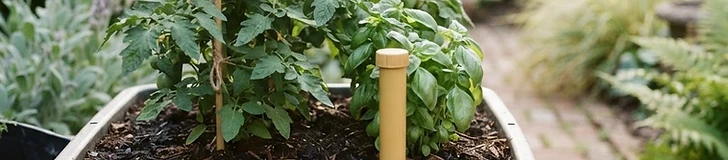
Building a self-watering container—often called a sub-irrigated planter—allows you to create an EarthBox-style system that delivers water directly to the root zone. This method is perfect for thirsty crops like Solanum lycopersicum (tomatoes) and Capsicum annuum (peppers), especially in USDA zones 8–10 where summer heat can dry out standard pots in hours.
Essential Supplies
To build your reservoir system, you will need:
- Two 18-gallon plastic storage totes with lids.
- A short length of 2-inch PVC pipe for the fill tube.
- A 3-inch plastic nursery pot to act as the wicking cup.
- A drill with a 1/4-inch bit and a hole saw attachment.
Preparing the Reservoir
Start by cutting a 3-inch hole in one of the lids; this will be your wicking cup. Drill the hole near the center, then snap the nursery pot into place so it sits snugly. Next, cut a hole to fit the PVC pipe at one corner of the lid. This pipe will serve as your water intake. Finally, drill several 1/4-inch drainage holes around the lid perimeter to allow excess moisture to escape once the reservoir is full.
Setting the Wick
Pro tip: Use a high-quality, professional-grade potting mix rather than garden soil, as the potting mix's light structure is essential for pulling moisture upward through your wicking cup via capillary action.
Place your lid assembly inside the bottom tote. Fill the nursery pot (your wicking cup) and the base of the tote with a moisture-retentive potting mix until it is saturated. This wet soil acts as a bridge that pulls water from the reservoir up to the root zone of your plants.
Assembly and Planting
Place the second tote (or the cut-off bottom portion) on top of your reservoir lid. Fill it with fresh potting mix, leaving 2 inches at the top. Insert your plants through the soil and into the wicking cup base. Use the PVC pipe to add water until you see it begin to trickle out of the overflow holes on the side of the container.
Check your water level once a week during peak heat and top off as needed to ensure your plants stay thriving even during 95°F days. With this simple setup, you can enjoy a low-maintenance, high-yield container garden all season long.