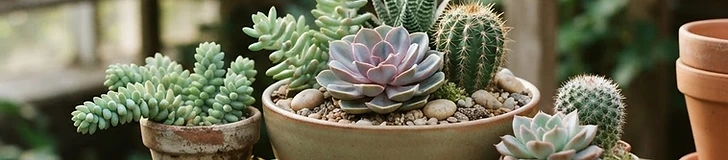
An overhead view of a terra cotta bowl filled with various colorful echeveria and sedum succulents arranged with small decorative pebbles.Succulents & Cacti

Designing Stunning Succulent Arrangements

2 min read 372 words

Learn how to combine textures, shapes, and colors to create thriving succulent containers that elevate your indoor or outdoor garden.

Creating a succulent arrangement is an art form that balances aesthetics with the biological needs of your plants. This guide will teach you how to group species effectively so your containers stay healthy while looking professional.

Selecting the Right Vessel The most important rule for container selection is drainage. Succulents cannot tolerate 'wet feet,' which leads to root rot. Always choose a pot with at least one drainage hole at the bottom. If you fall in love with a decorative pot that lacks a hole, use it as a cachepot by placing a plastic nursery container inside it. Ensure the material is breathable, such as unglazed terracotta, which helps moisture evaporate faster in humid environments.

Mastering the Thriller, Filler, Spiller Method To create a balanced design, follow the classic container gardening formula:

  1. Thriller: Place a tall, architectural plant like Sansevieria or a tall Aloe in the center or back.
  2. Filler: Use medium-sized plants like Echeveria or Graptopetalum to fill the gaps.
  3. Spiller: Add trailing varieties like Sedum morganianum (Burro’s Tail) near the edges to soften the container lines.

Always group plants with identical water and light requirements; mixing desert cacti with tropical succulents will cause one or the other to fail.

Grouping by Needs When arranging, prioritize compatibility. In the US, if you are keeping these outdoors in USDA zones 9–11, ensure your arrangement is placed where it receives at least six hours of bright, indirect sunlight. If temperatures drop below 40°F, you must bring the arrangement indoors or cover it with frost cloth. Avoid over-crowding; while arrangements look best when full, give each plant at least an inch of space to allow for airflow, which helps prevent fungal issues.

Soil and Finishing Touches Use a specialized cactus and succulent mix amended with extra perlite or pumice for maximum drainage. Once planted, avoid watering for a week to let roots recover. Finish your design by top-dressing with pea gravel or horticultural grit; this keeps the lower leaves off the moist soil surface, preventing rot and giving your arrangement a clean, polished appearance. With a bit of planning and the right soil, your succulent arrangement will become a long-lasting centerpiece for your home or patio.

Watch & learn

Curated variety-trial and pest-ID videos related to this article.

How to Plant a Succulent Arrangement

Open
#succulents#container gardening#design#indoor plants

More in Succulents & Cacti

We use a couple of cookies to keep you signed in and remember your settings — no tracking ads, and we never sell your data. Read our privacy policy.