
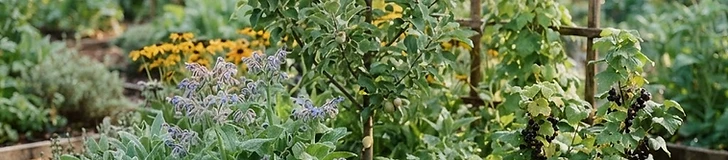
A food forest is a designed ecosystem that mimics the structure of a young woodland. By stacking plants in seven distinct vertical layers, you can grow more food in a smaller footprint while reducing the need for constant maintenance.
The Canopy and Low Tree Layers
The Canopy layer consists of large nut or fruit trees, such as Carya illinoinensis (pecan) or Malus domestica (apple). Below them, the Low Tree layer features smaller trees like Prunus persica (peach) or Citrus varieties. These provide the structural backbone for your guild, capturing sunlight while offering shade for more sensitive plants below.
Shrub and Herbaceous Layers
The Shrub layer includes woody perennials like Vaccinium (blueberries) or Ribes (currants). Beneath these, the Herbaceous layer thrives, consisting of plants that die back in winter. This group includes medicinal herbs, culinary favorites like Rosmarinus officinalis, and pollinator-friendly flowers that help deter pests.
Observe your yard's natural light patterns throughout a full day before planting; place your canopy trees on the north side of your garden to avoid casting too much shade on your sun-loving vegetable crops.
Ground Cover and Rhizosphere
The Ground Cover layer uses creeping plants like Fragaria (strawberries) or Trifolium repens (clover) to act as a living mulch. This protects your soil from erosion and helps retain moisture. Below the surface, the Rhizosphere layer includes root crops such as Daucus carota (carrots) and Allium cepa (onions), which thrive in the soil space created by the upper canopy.
The Vertical Layer
The final component is the Vertical layer, which uses vining plants to climb existing structures or trees. Crops like Vitis (grapes) or Actinidia arguta (hardy kiwi) utilize vertical space that would otherwise go to waste. Ensure your supporting trees are mature enough to handle the extra weight before introducing these vigorous climbers.
Start small by choosing one corner of your yard to establish your first guild, focusing on native species that are well-adapted to your specific USDA hardiness zone.