
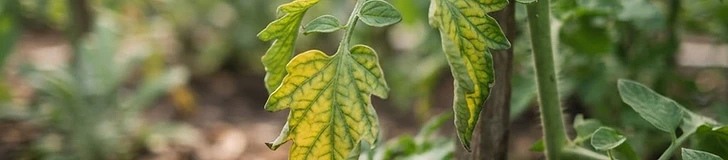
Seeing your tomato plants change color or shape can be alarming, but most leaf issues are manageable if you know how to read the signs. This guide will help you differentiate between normal growth patterns and urgent health problems so you can save your harvest.
Understanding Yellow Leaves
Chlorosis, or the yellowing of leaves, is often a cry for help. If the lower, older leaves turn yellow, your plant might be signaling a nitrogen deficiency or overwatering. However, if the yellowing is accompanied by dark brown spots or a mottled pattern, it could be a fungal infection like Septoria leaf spot.
- Ensure plants get at least 1 inch of water per week.
- Check soil drainage; roots sitting in water quickly turn yellow.
- Improve airflow by pruning the bottom 12 inches of foliage.
Decoding Leaf Curling
Leaf curl happens for several reasons, and not all are catastrophic. If the leaves roll upward into a cup shape but remain green, the plant is likely protecting itself from intense heat or excess sun exposure. This is a common defense mechanism during mid-summer heatwaves when temperatures exceed 90°F.
- Check if the soil is dry and mulch with straw to keep roots cool.
- Observe if the curling is uniform across the entire plant.
- Look for aphids or mites on the undersides, as pests can also cause distortion.
Pro-tip: If leaves are curling and look twisted or leathery, check for herbicide drift from nearby lawns, which is a common silent killer of tomato health.
Managing Disease and Pests
Fungal pathogens often cause patches of brown or yellow death on leaves. Early blight is a frequent culprit, recognizable by "bullseye" patterns on leaves.
- Remove any foliage touching the soil immediately to prevent soil-borne spores from splashing up.
- Use a copper-based fungicide if the infection spreads rapidly during wet, humid weather.
- Practice crop rotation; never plant tomatoes in the same spot where peppers or eggplants grew last year.
Environmental Stressors
Sometimes, the issue isn't a disease at all. Rapid growth during warm, wet springs can lead to physiological leaf roll, where the plant grows faster than its vascular system can support. This is harmless and usually resolves on its own once the plant matures.
Consistent observation is your best tool for a productive, healthy tomato season.