
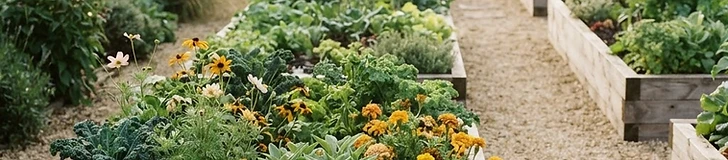
Achieving a professional-looking landscape starts with structure rather than specific plant choices. By focusing on intentional layout, you create a garden that feels purposeful and organized, regardless of your USDA zone or available square footage. Follow these steps to design a garden that works with your space, not against it.
Define Your Boundaries with Raised Beds. Using raised beds is the quickest way to impose order on a chaotic landscape. Whether you build with cedar or recycled composite, keep your beds at a maximum width of 4 feet; this allows you to reach the center from either side without stepping into and compacting the soil. For a cohesive look, keep the paths between your beds consistent—ideally 2 to 3 feet wide—to ensure you can move a wheelbarrow comfortably during the busy spring planting season.
Establish Permanent Bed Edging. Without clear edges, garden beds eventually bleed into lawn space, creating a messy appearance. Edging acts as a visual frame. Install metal, stone, or plastic landscape edging at least 4 inches deep to create a clean line that separates your vegetable beds from the grass. This simple physical barrier prevents invasive turf grass like Cynodon dactylon from creeping into your cultivated zones.
Master the Grid Planting Method. Instead of scattering seeds randomly, adopt a grid layout for your crops. Divide your space into 12-inch squares to maximize density and simplify maintenance. This method allows you to calculate exactly how many plants, such as Solanum lycopersicum, will fit in a single bed based on their mature size.
Pro Tip: Always layout your garden pathways first using string or temporary flour lines before building; it is much easier to adjust your design on the ground than to move heavy wooden beds once they are filled with soil.