
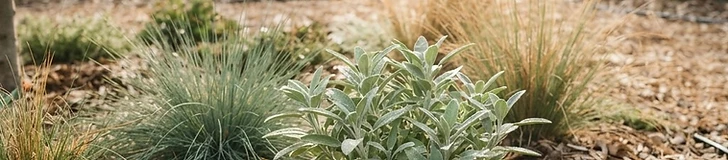
Conserving water in a dry climate starts with protecting the soil surface. By using mulch and strategic groundcovers, you create a barrier that stops evaporation, suppresses weeds, and keeps root zones cool during intense summer heat.
The Power of Organic Mulch
Organic mulch acts as an insulating layer for your garden beds. When applied 2 to 3 inches thick, it shades the soil from direct sun, preventing the rapid moisture loss that often leads to wilting in zones 7–9. Wood chips, shredded bark, or pine needles break down slowly, improving soil structure while keeping moisture locked near plant roots. Always leave a small gap around the stems of your shrubs to prevent rot.
Choosing Living Groundcovers
Instead of bare soil, consider living mulch through drought-tolerant groundcovers. These plants shade the earth, cool the soil temperature by 10°F or more, and prevent erosion. In sunny areas, Thymus serpyllum (Creeping Thyme) or Sedum spurium create a dense mat that requires very little supplemental irrigation once established. These plants turn high-maintenance beds into self-sustaining landscapes that thrive on infrequent, deep soakings rather than daily misting.
For the best results, clear all weeds before laying your mulch; weeds will aggressively compete with your desired plants for the limited water trapped beneath the surface.
Installation Best Practices
Applying your protective layers correctly ensures they function as intended throughout the growing season:
- Prepare the area by clearing debris and watering the soil deeply.
- Apply a 2-inch layer of compost before adding wood mulch to feed the soil microbes.
- Space groundcovers 8 to 12 inches apart to allow them to fill in and knit together over one season.
- Replace or top off organic mulch annually in the early spring before the intense summer heat arrives.
Managing Irrigation
Even with protective covers, your plants need occasional deep hydration. Aim for long, slow watering cycles that penetrate at least 6 to 8 inches into the ground. By combining a physical mulch layer with deep, infrequent watering, you encourage plants to grow deeper roots, making them far more resilient to the drought conditions common in North American summers. Start small by treating one section of your landscape this weekend and observe how much longer your soil remains moist.