
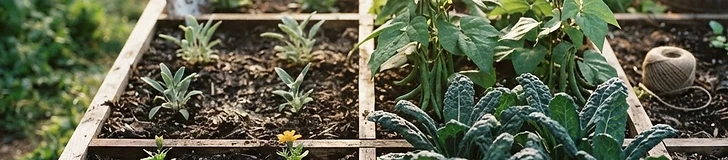
Succession and relay planting allow you to transform a single square foot from a barren patch into a year-round engine of productivity. By planning your transitions, you ensure no space sits idle while the soil remains active and nutrient-dense.
The Concept of Relay Planting
Relay planting involves starting a second crop in the same square before the first is finished. For example, when your Lactuca sativa (lettuce) is nearly ready for its final harvest, tuck a small Capsicum annuum (pepper) transplant into the corner of the same square. As the lettuce is harvested, the pepper plant gains the space and sunlight it needs to thrive, ensuring zero downtime in your grid.
Timing Your Successions
Succession planting focuses on staggering crops to avoid a "glut and gap" harvest cycle. Instead of planting four squares of Raphanus sativus (radish) at once, plant one square every two weeks. This simple rotation guarantees you have fresh, crisp radishes available throughout the entire growing season rather than a single massive harvest that you cannot eat fast enough.
Pro tip: Always keep a nursery of seedling trays nearby so you can drop a new plant into the vacant square the exact moment you pull the previous crop, preventing soil surface evaporation and weed growth.
Matching Crop Needs
Successful grid rotations require attention to temperature and plant families. In USDA Zones 5-8, replace cool-weather crops like Spinacia oleracea (spinach) with heat-lovers like Ocimum basilicum (basil) once night temperatures consistently stay above 50°F. Always rotate plant families to prevent soil-borne diseases: follow a heavy feeder like Solanum lycopersicum (tomato) with a light feeder or a legume to balance the nutrients.
Tracking Your Cycles
- Map your grid squares on a calendar at the start of the season.
- Identify fast-maturing crops (e.g., Phaseolus vulgaris bush beans) versus long-season crops.
- Note the average date of the first fall frost to plan your final "cool-down" sowings.
- Clean and amend each square with a handful of organic compost immediately after removing a finished plant to reset the soil for the next resident.
Consistent observation of your garden grid is the secret to turning small spaces into high-yield harvests.