
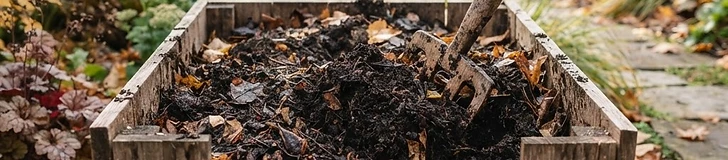
Good compost is the cheapest fertilizer you'll ever make, and it quietly fixes your soil while you sleep. The 'secret' is just a balance of ingredients and a little patience.
Greens, browns, and the 30:1 ratio
Feed your pile two to three parts browns (carbon) to one part greens (nitrogen) by volume:
- Greens: vegetable scraps, coffee grounds, grass clippings, fresh weeds (seed-free).
- Browns: fall leaves, straw, shredded cardboard, paper egg cartons, sawdust (untreated).
Too many greens and you get a slimy, smelly pile. Too many browns and nothing happens. Aim for a pile that feels like a wrung-out sponge — damp, not dripping.
Size and air
A pile needs to be at least 3×3×3 feet to hold heat. A smaller heap still works, just slower. Turn it every 1–2 weeks with a fork to fold in oxygen; a hot pile (130–150°F) finishes in 6–8 weeks, a cold pile in 6–12 months.
What never goes in
No meat, dairy, oils, cat or dog waste, or diseased plants. Keep citrus and onion modest if you compost with worms. Avoid weeds that have gone to seed — home piles rarely get hot enough to kill them.
When is it 'done'
Finished compost is dark, crumbly, smells like a forest floor, and you can't recognize the originals. Sift out the chunky bits and return them to start the next batch. Work 1–2 inches into beds each season, or use it as a top-dressing mulch around plants.
Keep a small bucket with a lid in the kitchen and empty it every 2–3 days. Once you see how fast a pile shrinks, you'll never throw out a carrot top again.