
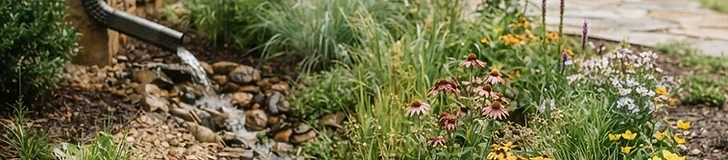
A rain garden is a shallow, planted depression placed where water naturally flows on your property — usually just downhill from a downspout, driveway, or low spot in the lawn. It is not a pond and never holds water for more than a day. Instead, it slows runoff down, spreads it out, and lets it soak safely into the soil.
What a rain garden does
When rain hits a roof, driveway, or compacted lawn, it sheets off fast — carrying soil, fertilizer, and debris toward the storm drain. A rain garden intercepts that flow. The plants and their root channels act as a sponge, while the basin gives the water a place to pool briefly and percolate. The result is less runoff, cleaner water leaving your yard, and a thriving patch of native plants that won't need watering once established.
Choosing the spot
Walk your yard during a steady rain and watch where the water goes. Pick a spot that:
- Receives runoff but is at least 10 feet from your foundation
- Is not directly over a septic field or utility line
- Is downhill enough that water reaches it by gravity
- Has reasonably well-draining soil (a quick perk test tells you)
Avoid soggy low spots that already stay wet for days — those are wetlands, and a rain garden there won't drain.
Sizing and digging
A typical home rain garden is around 100 to 150 square feet and 4 to 8 inches deep — deep enough to hold a meaningful volume, shallow enough that you can mow the edge. For a roof draining about 500 square feet, a 100-square-foot garden handles most storms.
Dig the basin so the bottom is flat and level; slope the sides gently so plants can hold the soil. Heap the excavated soil into a low berm on the downhill side to keep water from escaping. The overflow point — where excess water leaves in a big storm — should be a low, stabilized notch so it never blows out.
The soil mix
If your native soil drains slowly (common with heavy clay), replace the top 12 to 18 inches with a mix of roughly 50% sand, 30% compost, and 20% native topsoil. This blend drains within 24 hours and gives plants rich rooting. Fast-draining sandy soil may just need a compost top-up.
Planting the basin
Choose plants that tolerate both brief flooding and dry spells between storms. Group them by zone within the garden:
- Bottom (wettest): blue flag iris, swamp milkweed, sedges
- Sides (moist): bee balm, Joe-Pye weed, New England aster
- Top / berm (driest): little bluestem, coneflower, black-eyed Susan
Native plants are ideal — their deep roots open the soil and they need no fertilizer once established. Mulch with 2 to 3 inches of shredded hardwood to suppress weeds and hold moisture.
Caring for it
The first season is all about root establishment. Water weekly if it stays dry, and pull weeds before the natives fill in. After the first year, a rain garden largely takes care of itself — cut back the previous year's stems in late winter and top up mulch occasionally.
Practical tips
- Call before you dig to avoid utility lines.
- Make the overflow a clearly defined notch, armored with stone, so big storms don't erode the berm.
- Don't fertilize — rain gardens thrive on lean soil.
Quick takeaway
A shallow, planted basin in the right spot turns runoff into a resource, feeding the garden while keeping clean water off the storm drain.