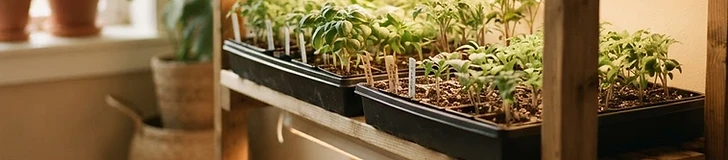
A multi-tiered wire shelving unit in a home setup holding several plastic seedling trays under bright white LED shop lights.Indoor & Grow-Lights

Build Your Own Indoor Seed-Starting Station

2 min read 359 words

Learn how to build a space-efficient DIY shelving unit to kickstart your spring garden regardless of your climate or available outdoor space.

Starting seeds indoors allows you to extend your growing season by weeks, giving warm-season crops like tomatoes and peppers a vital head start before the final frost. By constructing a dedicated shelving unit, you can manage light and temperature levels to produce sturdy, healthy transplants for your USDA zone garden.

Selecting Your Equipment To build a reliable station, start with a wire-grid shelving unit measuring 48 inches wide by 18 inches deep. These open structures provide excellent airflow and allow for easy adjustment of light heights. When choosing lights, opt for full-spectrum LED shop lights. These are energy-efficient and generate minimal heat, preventing accidental burning of delicate seedlings. Ensure your unit has at least four tiers to maximize your square footage.

Preparing the Assembly 1. Choose a location with a consistent ambient temperature, ideally between 65°F and 75°F.

  1. Assemble the shelves according to the manufacturer's instructions, ensuring the unit is level.
  2. Use heavy-duty zip ties to secure light fixtures to the underside of each shelf.
  3. Connect your lights to a digital outlet timer set for 14–16 hours of daily operation.

To keep your seedlings from becoming 'leggy' or weak, position your lights so the bulbs remain just 2 to 3 inches above the tops of the plants at all times.

Environmental Control Managing the microclimate is crucial for success. Place a small oscillating fan on a lower shelf to promote air circulation, which strengthens plant stems and helps prevent fungal issues like damping-off. If your indoor space is particularly cool, place a seedling heat mat beneath your trays to maintain the 70°F–80°F soil temperature required for faster germination.

Organizing Your Trays Start your seeds in standard 1020 trays. Use high-quality seed-starting mix, which is lighter and finer than potting soil, to ensure roots can expand easily. Label every tray with the plant variety and the date sown to keep track of your progress. Always keep a spray bottle handy to mist the surface lightly, ensuring the medium stays moist but never waterlogged. Success in indoor gardening comes down to consistency, so observe your seedlings daily for signs of growth or stress.

Watch & learn

Curated variety-trial and pest-ID videos related to this article.

How to Start Seeds Indoors - Epic Gardening

Open
#Seed Starting#Indoor Gardening#Grow Lights#DIY Garden Projects

More in Indoor & Grow-Lights

We use a couple of cookies to keep you signed in and remember your settings — no tracking ads, and we never sell your data. Read our privacy policy.