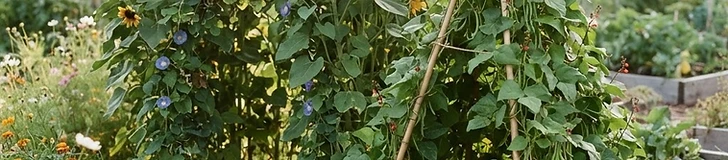
A child peering out from inside a lush green teepee structure made of grown climbing bean vines in a suburban backyard.Kids & Family

Build a Living Fort: Sunflowers and Bean Teepees

2 min read 363 words

Transform your backyard into a magical hideaway by growing your own living structures using sunflowers and climbing beans.

Turning your garden into a play space is easy when you use nature as your building material. By training vigorous climbers or tall flowers to form walls and roofs, you can create a private, green fort that keeps children engaged with the outdoors all summer long.

Choosing Your Structure Plants For a sunflower house, you need tall, branching varieties like Helianthus annuus 'Giant Grey Stripe' or 'Russian Mammoth' which can reach heights of 8 to 12 feet. If you prefer a bean teepee, select vining varieties such as 'Kentucky Wonder' or 'Scarlet Runner Bean'. These plants grow rapidly once soil temperatures consistently hit 65°F.

Setting Up the Foundation Site selection is crucial for success. Choose a spot that receives at least 6 to 8 hours of direct sun daily, as both sunflowers and beans thrive in bright, hot conditions.

  1. Mark a circle roughly 6 feet in diameter in your soil.
  2. Push 6 to 8 bamboo poles or sturdy wooden stakes into the ground at an angle.
  3. Secure the tops tightly with twine to form a conical teepee frame.

Always soak your bean seeds in water for 12 hours before planting to speed up germination and ensure your living walls grow evenly.

Planting and Training Once your structure is in place, plant your seeds 6 inches apart around the perimeter. As the seedlings emerge, gently guide the bean tendrils toward the twine or poles to encourage upward growth. For the sunflower house, plant seeds in a circle to form a dense hedge, leaving a 2-foot gap for an entrance.

Maintenance for Growth During the heat of mid-summer, keep the soil moist but not waterlogged. Adding a 2-inch layer of organic mulch helps retain soil moisture and prevents weeds. If you live in USDA zones 3 through 7, start your beans indoors 3 weeks before the last frost date to give them a head start. By late summer, the foliage will create a cool, shaded canopy perfect for reading, playing, or simply hiding from the world. A little patience in the spring pays off with a beautiful, living garden room that children will treasure all season long.

Watch & learn

Curated variety-trial and pest-ID videos related to this article.

How to Build a Bean Teepee for Kids

Open
#Kids#Family Gardening#Vegetable Gardening#Flowers#Summer Projects

More in Kids & Family

We use a couple of cookies to keep you signed in and remember your settings — no tracking ads, and we never sell your data. Read our privacy policy.