


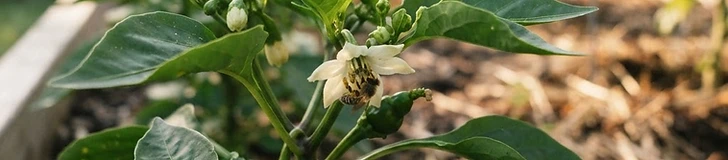
Seeing tiny flowers wither and fall off your pepper plants can be frustrating, but it is a common issue for home gardeners. This article explains the causes of blossom drop and provides practical steps to ensure your plants successfully set fruit throughout the growing season.
The Role of Pollination
Peppers (Capsicum annuum) are self-pollinating, meaning they contain both male and female parts within the same flower. While they do not strictly require bees to cross-pollinate, they do need mechanical agitation to move pollen from the anthers to the stigma. In a garden with little wind, this pollen stays trapped. Gently shaking your plants once a day or using a small fan on container-grown peppers can significantly increase your harvest success.
Temperature Sensitivity
Peppers are sensitive to extreme weather, which is the primary cause of flower abortion. When daytime temperatures consistently climb above 90°F or nighttime temperatures stay above 75°F, the plant experiences heat stress and focuses on survival rather than reproduction. Conversely, temperatures below 60°F can prevent pollen from forming correctly. If your area experiences a heat wave, keep your plants well-mulched to retain soil moisture and consider using shade cloth to drop the temperature around the plants by 5–10 degrees.
Pro Tip: If you notice blossoms falling during a heatwave, don't prune the plant; keep it hydrated and wait for the temperature to stabilize, as healthy plants will resume flowering once the stress passes.
Water and Nutrient Balance
Inconsistent moisture is a major culprit in blossom drop. If the soil dries out completely, the plant sheds its flowers to conserve water. Aim to keep the soil consistently moist but not waterlogged, usually requiring about 1 inch of water per week. Additionally, avoid high-nitrogen fertilizers once the plants begin to flower. Too much nitrogen causes lush, leafy green growth at the expense of fruit production. Instead, switch to a balanced fertilizer lower in nitrogen and higher in phosphorus and potassium to encourage flower development.
Managing Plant Energy
Sometimes, your plants might be trying to do too much. If you have many peppers currently maturing, the plant may drop new flowers because it lacks the resources to support more fruit simultaneously. Regular harvesting of mature peppers signals the plant to start developing a new round of fruit. Keeping your plants healthy and properly spaced in the garden helps them direct energy toward producing a bountiful harvest all summer long.
With consistent care and proper temperature management, your pepper plants will quickly move from flowering to fruiting.