
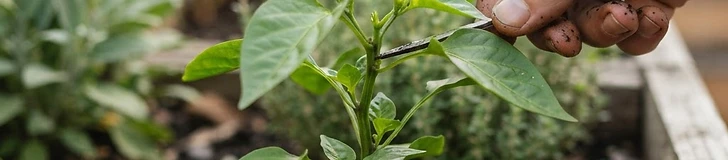
If you want to move beyond a single, spindly main stem and harvest more peppers per plant, learning to pinch your seedlings is a game-changer. By removing the growing tip early, you signal the plant to stop putting energy into upward height and start focusing on side branching, resulting in a sturdier, more productive structure.
Understanding the Pinch
Pinching involves removing the very top set of leaves or the terminal bud on a young pepper plant (Capsicum annuum). This process breaks the plant's apical dominance—the tendency to grow straight up from the main shoot. When you remove that top tip, the plant redirects its growth hormones to the auxiliary buds located at the leaf nodes, forcing the plant to grow outwards rather than just upwards.
When to Pinch
Timing is critical for success. You should aim to pinch your peppers when they are about 8 to 12 inches tall, or when they have developed 6 to 8 sets of true leaves. This typically happens a few weeks after transplanting into your garden once the soil temperatures are consistently above 65°F. Avoid pinching if the plant is stressed from transplanting, drought, or extreme heat, as it needs energy to recover.
Pro Tip: Always use sanitized, sharp garden shears or your fingernails to make a clean break, as ragged tears can invite pathogens or rot into the stem.
How to Pinch
- Identify the main stem and look for the growing point at the very top.
- Locate the leaf node just below the cluster of tiny, developing leaves.
- Pinch or snip cleanly just above that node.
- Within 7 to 10 days, you will notice new growth erupting from the leaf axils below the cut.
Managing Expectations
While pinching creates a bushier plant, it does slightly delay the initial harvest by a week or two. In USDA zones 5 or 6, where the growing season is shorter, evaluate if your variety has enough time to ripen before the first frost. For most gardeners, the payoff of a structurally sound plant that supports more fruit without breaking is well worth the wait. With more branches, you gain more potential flower sites, which ultimately means a much larger harvest for your kitchen.