
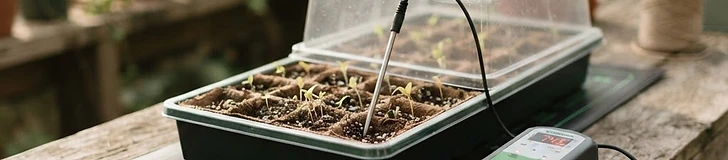
Jumpstarting your garden in early spring is much easier when you control the soil temperature. By using a heat mat and a digital thermostat, you can ensure consistent, reliable germination for heat-loving crops regardless of the air temperature in your home or garage. This setup is a game-changer for gardeners in USDA zones 5 through 9 looking to get a head start on the season.
Essential Equipment
To create your own germination station, you will need a few key items. Reliability is important, so invest in quality components that can handle damp environments:
- A waterproof seedling heat mat sized to fit your seed trays.
- A digital heat mat thermostat with a remote probe.
- A seed tray with a humidity-retaining clear plastic dome.
- A sturdy surface, such as a metal rack or a wooden workbench.
Setting Up the Controller
Precision is key to success. The thermostat prevents your seeds from cooking by cutting power once the soil reaches your target temperature.
- Place the heat mat on a flat, stable, water-resistant surface.
- Insert the probe into the center of your seed starting medium, about 1 inch deep, ensuring it is not touching the heating element directly.
- Plug the heat mat into the thermostat power outlet.
- Set the digital display to your desired temperature, typically between 70°F and 80°F for most vegetable crops.
Always calibrate your probe by placing it in a glass of water next to a reliable thermometer to ensure your target settings are actually reflecting the temperature inside your soil plugs.
Optimal Temperature Zones
Different vegetables have specific temperature preferences for rapid germination. Understanding these ranges helps you organize your planting schedule:
- Cool-season crops like Brassica oleracea (broccoli or kale) often prefer 65°F to 70°F.
- Warm-season favorites like Solanum lycopersicum (tomatoes) and Capsicum annuum (peppers) thrive best between 75°F and 85°F.
Monitoring and Maintenance
Once the seedlings emerge, you must remove the heat mat or adjust the thermostat lower. Keeping the soil too warm after germination can lead to weak, leggy stems. Monitor the moisture levels daily, as heat mats significantly increase the rate of evaporation compared to unheated trays. Keep your soil moist but never waterlogged to encourage strong, healthy root development.