
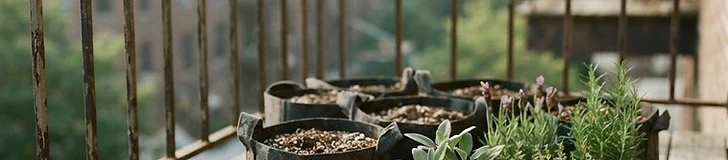
Before you buy your first bag of soil, your balcony requires a quick assessment. By understanding your space's physical constraints and microclimate, you prevent structural damage and save your plants from premature failure. This audit ensures your urban oasis is sustainable and safe.
The Weight Audit
Balconies are not built to hold infinite weight. Wet soil is incredibly heavy; a single large, moisture-saturated ceramic pot can weigh over 100 pounds. To avoid structural strain, follow these steps:
- Check your lease for specific weight restrictions or contact your property manager.
- Use lightweight, high-quality potting mix containing perlite or vermiculite instead of heavy garden soil.
- Opt for BPA-free plastic, resin, or fabric containers instead of terra cotta or stone.
- Group heavy pots near the building's structural walls rather than at the outer railing edge.
The Wind Assessment
High-rise balconies experience significantly higher wind speeds than ground-level gardens. Persistent gusts can dehydrate foliage rapidly and topple tall containers. If your balcony sits above the third floor, wind is a primary factor in plant survival.
Pro tip: Secure lightweight pots to railings using heavy-duty zip ties or bungee cords, and use low-profile, wide-based containers to lower the center of gravity for wind stability.
Understanding Your Light
Light is the engine of plant growth, and balcony light is often obscured by overhangs or neighboring buildings. Spend two full days tracking the sun to determine if your space is truly full sun (6+ hours) or shade.
- Observe your balcony at 9 AM, 12 PM, and 4 PM.
- Note which areas stay in constant shadow; these are your spots for Hostas or Fuchsias.
- Identify the sun-drenched corners, perfect for tomatoes or Basil in USDA zones where temperatures stay above 50°F at night.
Choosing Your Plants
Once you know your light and wind levels, select plants that match your environment. If your balcony is prone to drying winds, choose succulents or hardy Mediterranean herbs like Thymus vulgaris (thyme). If you are shaded, focus on leafy greens. Remember that plants in containers dry out faster than those in the ground, so plan for a consistent watering schedule throughout the hot summer months. With these three audits completed, your balcony is ready to host a thriving, manageable, and safe container garden.