
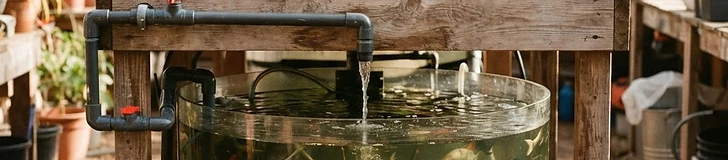
Aquaponics is hydroponics with a fish tank attached — fish waste feeds the plants, the plants clean the water for the fish. It's a closed loop that produces both protein and produce, and it uses about 5% of the water of conventional gardening.
How the loop runs
- Fish (tilapia, goldfish, koi, catfish) eat and produce ammonia-rich waste.
- Beneficial bacteria in the grow bed convert ammonia to nitrite to nitrate.
- Plants absorb nitrate as fertilizer, cleaning the water.
- Clean water returns to the fish. Repeat forever.
The bacteria are the silent partner — a new system takes 4–6 weeks to cycle (build a bacterial colony). Don't add fish to plants before it cycles, or ammonia kills both.
A beginner setup
A 50–100 gallon fish tank, a small water pump, a grow bed of expanded clay above the tank, and a bell siphon that floods and drains the bed automatically. Start with goldfish or koi in a tank under 70°F; tilapia if you want warm-water and edible fish. Grow lettuce, herbs, and greens; skip heavy fruiting crops year one.
The balancing act
- Feed the fish lightly at first — more fish food means more ammonia, and a young bacterial colony can't keep up.
- Watch pH — the sweet spot is 6.8–7.0, a compromise between what fish, plants, and bacteria each want.
- Test ammonia, nitrite, and nitrate weekly until the system is cycled and stable, then only monthly.
The honest trade-offs
Aquaponics is more complex than hydroponics and more forgiving in some ways (plants rarely burn from overfeeding). It shines if you want both fish and greens and like a project that runs itself once balanced. Otherwise, straight hydroponics or soil are simpler roads to the same salad.