
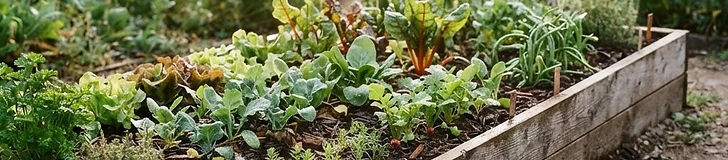
Your first garden should make you want a second one. Most first-year disappointment comes from a few avoidable choices, not from a lack of skill. Here is the short version.
Pick a small, sunny spot
Sun is the one thing you can't fake. Vegetables need 6+ hours of direct sun; herbs and greens tolerate less. Pick the sunniest spot you have. Make the bed 4×8 feet and start ONE — you can always add a second next spring.
Build the soil once
A raised bed lets you start with great soil instead of fighting clay or sand. Fill it with about 30% compost, 70% topsoil or a raised-bed mix. If you're in-ground, work in 2 inches of compost and loosen the soil a fork-depth deep. Good soil is the entire game.
The forgiving five (year one)
- Radishes — ready in a month, grow in any soil.
- Leaf lettuce — cut and it grows back.
- Bush beans — no trellis, generous, fast.
- Cherry tomatoes (one plant) — buy a seedling, put it in, water.
- Zucchini (two plants) — you will have zucchini.
Skip the fussy: cauliflower, celery, onions from seed, giant pumpkins. Add them in year two.
Water the right way
Water at the base, not the leaves, in the morning. A deep watering twice a week beats a daily sprinkle. Push a finger in — if the soil's dry 2 inches down, water. Mulch with straw or leaves to stretch the time between.
The five-minute weekly walk
Walk the bed once a week and look. Notice holes, yellow leaves, dry soil, the first tomato ripening. Almost every problem is small if you catch it early; every problem is big if you don't check. This 5 minutes replaces most of the garden advice on the internet.
Don't measure success in pounds
Your first garden isn't about yield — it's about learning what your spot does. A handful of tomatoes you grew yourself changes how dinner feels. Keep a short note each week of what worked, and start next year's plan from there.